Chatbot-Augmented Flipped Learning
A technology-enhanced framework for developing linguistic and clinical communication competence in healthcare professionals.
Framework Overview
A Chatbot-Augmented Flipped Learning Framework
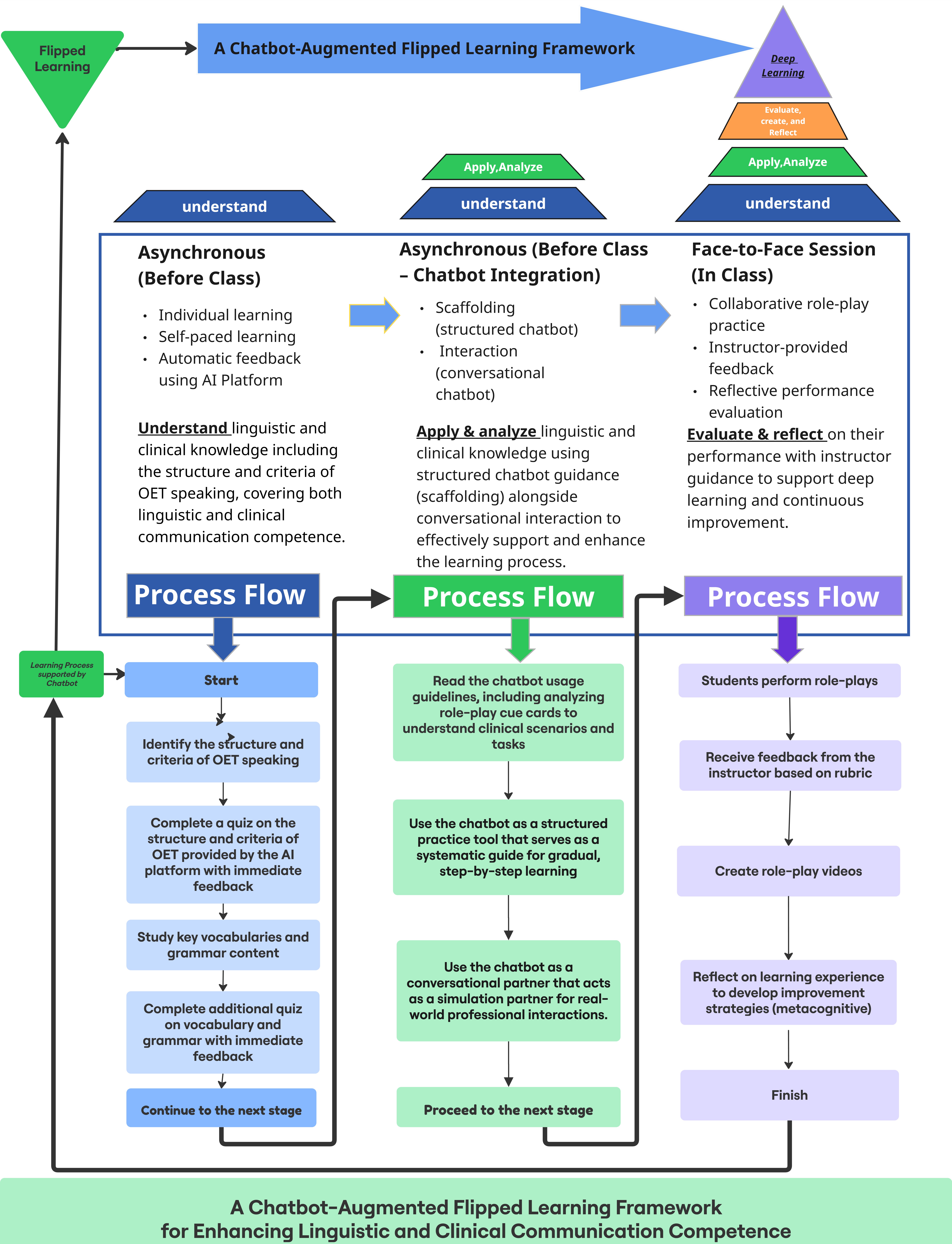
A Chatbot-Augmented Flipped Learning Framework is a technology-enhanced instructional framework that integrates flipped learning, AI chatbot scaffolding, collaborative role-play, lecturer feedback, and reflective learning to support the development of linguistic and clinical communication competence. The framework provides a systematic, interactive, and student-centered learning environment in which students actively engage in authentic healthcare communication tasks while continuously improving their speaking performance. This framework is particularly suitable for OET-oriented instruction and EMI healthcare education contexts because it promotes flexibility, personalization, interaction, and deep learning within a structured instructional process.
Framework Diagram
Complete visual representation of the learning model
The Three Phases
From foundational understanding to deep learning
- Study OET speaking structure and assessment criteria
- Learn key medical vocabulary and grammar content
- Complete quizzes with immediate AI platform feedback
- Build foundational linguistic and clinical knowledge independently
- Read chatbot usage guidelines and analyze role-play cue cards
- Use chatbot as a structured practice tool — step-by-step scaffolding
- Use chatbot as a conversational partner — simulated clinical interactions
- Apply and analyze linguistic/clinical knowledge with AI feedback
- Perform collaborative role-plays with classmates
- Receive rubric-based feedback from the lecturer
- Create role-play videos for self-assessment
- Reflect on learning experience and build improvement strategies